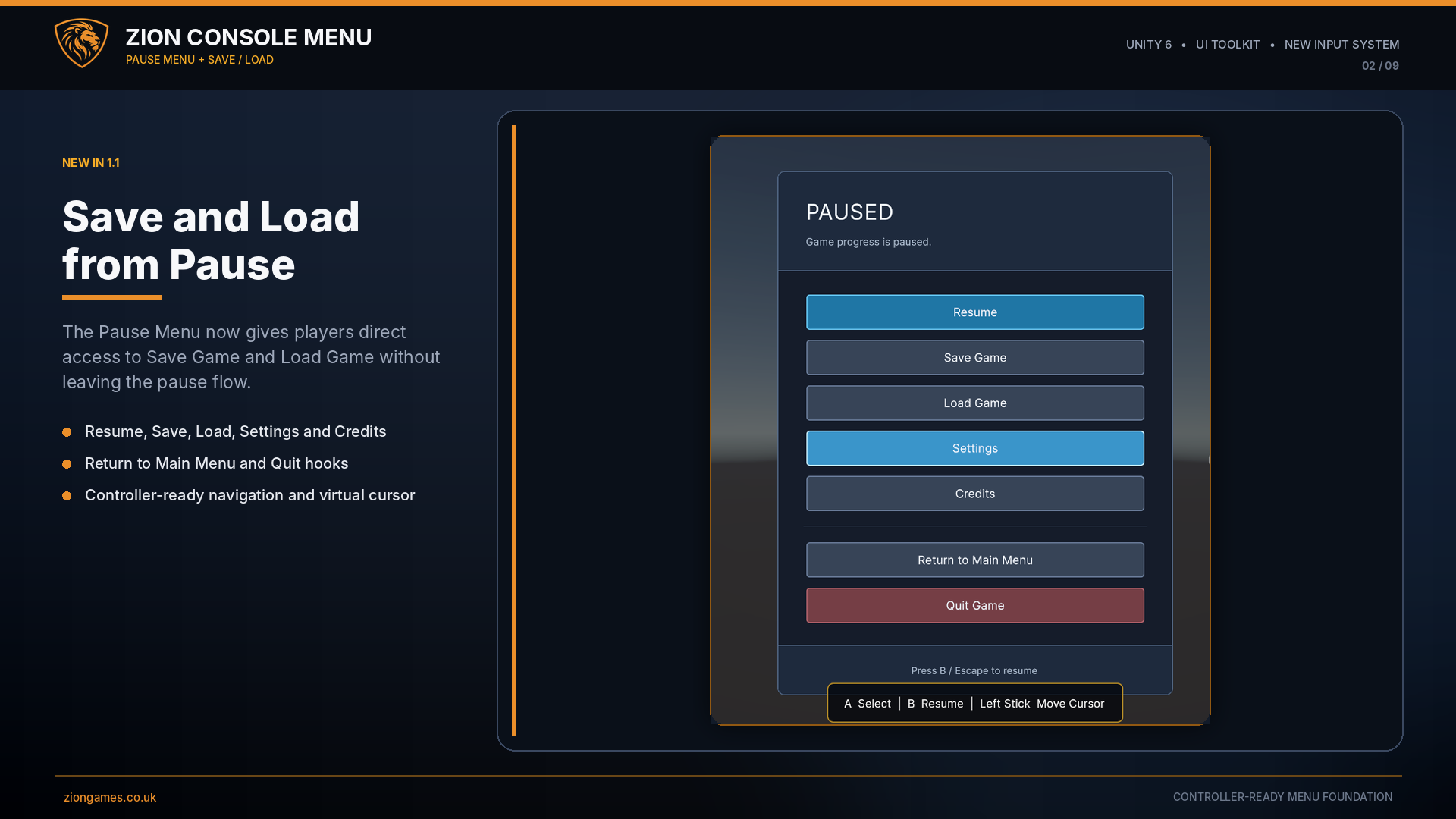
Menus that feel connected
Main, Pause, Credits and confirmation flows share central history and back behaviour.
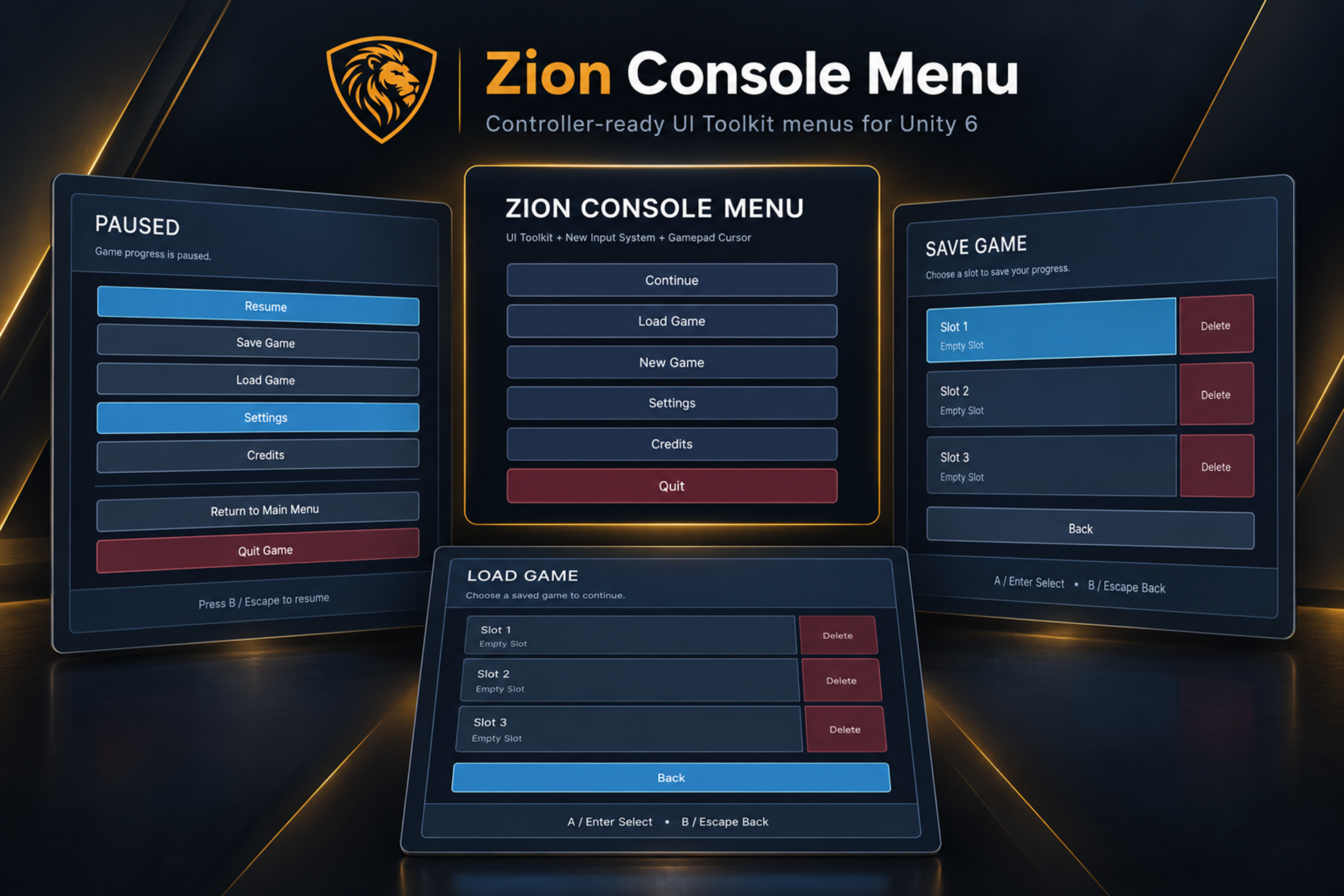
Unity 6 Standalone system · v1.1.0
Ship controller-ready Main, Pause, Save, Load and Settings screens through one polished UI Toolkit foundation—without surrendering your game architecture.
A complete player-facing foundation
Stop rebuilding navigation, settings and pause logic for every project. Zion Console Menu connects the screens players expect with predictable controller behaviour, navigation history and integration points your game can own.
Navigate
Main, Pause, Credits and confirmation flows share central history and back behaviour.
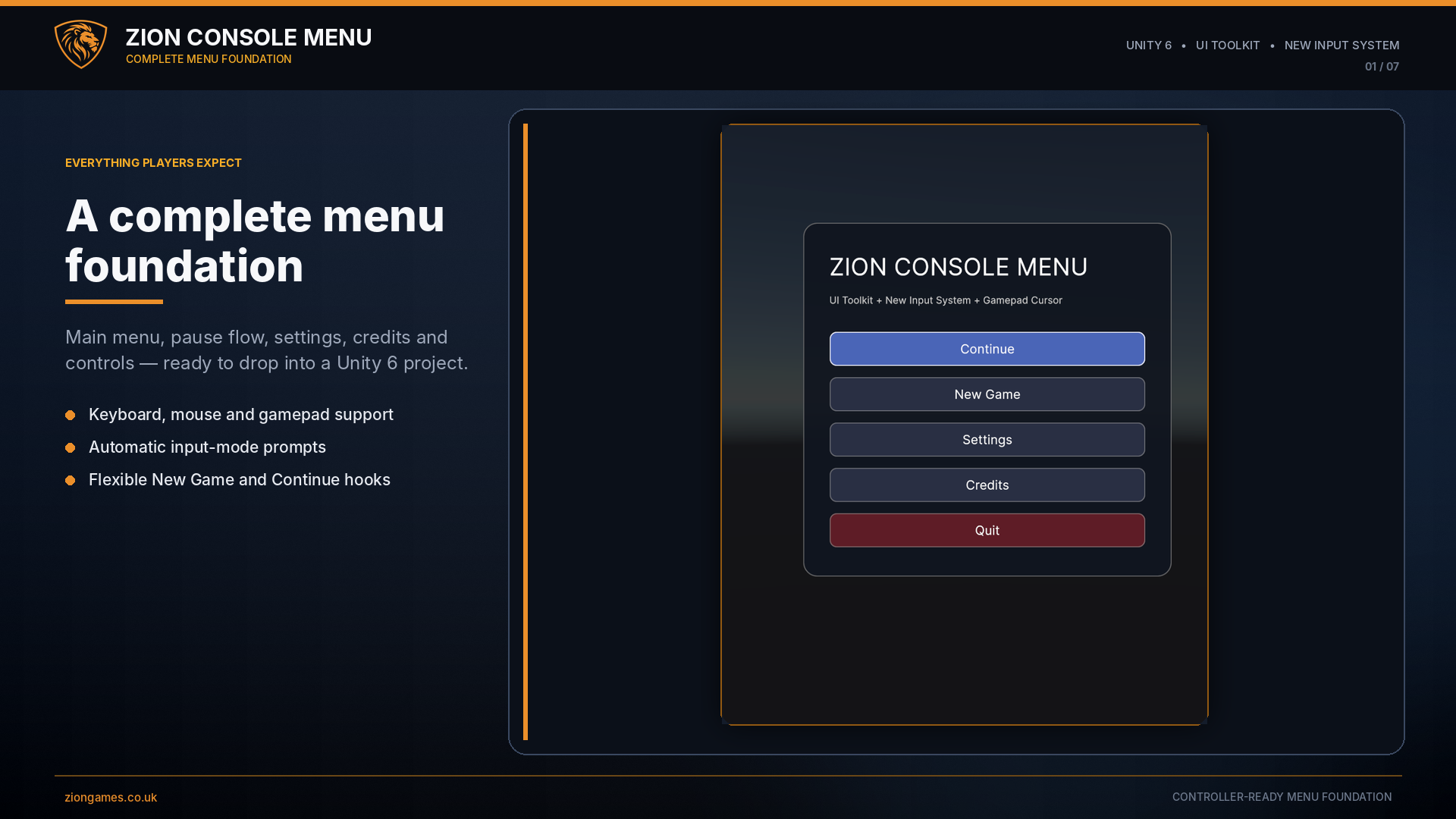
Configure
Audio, display and runtime input rebinding work across keyboard, mouse and gamepad.
Integrate
Connect the polished UI flow to your own save-data implementation through a provider.
Real Unity runtime and editor workflow
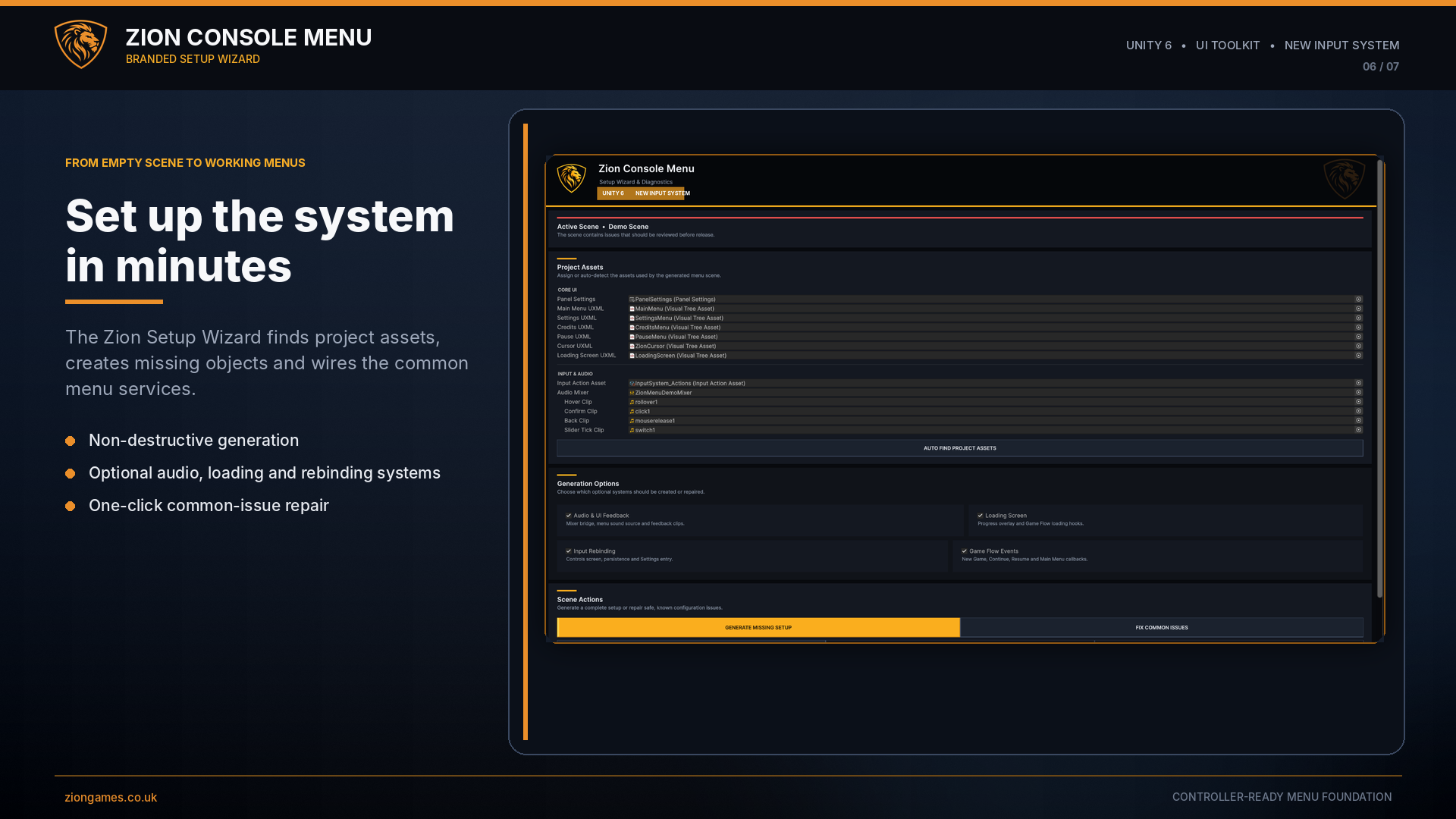
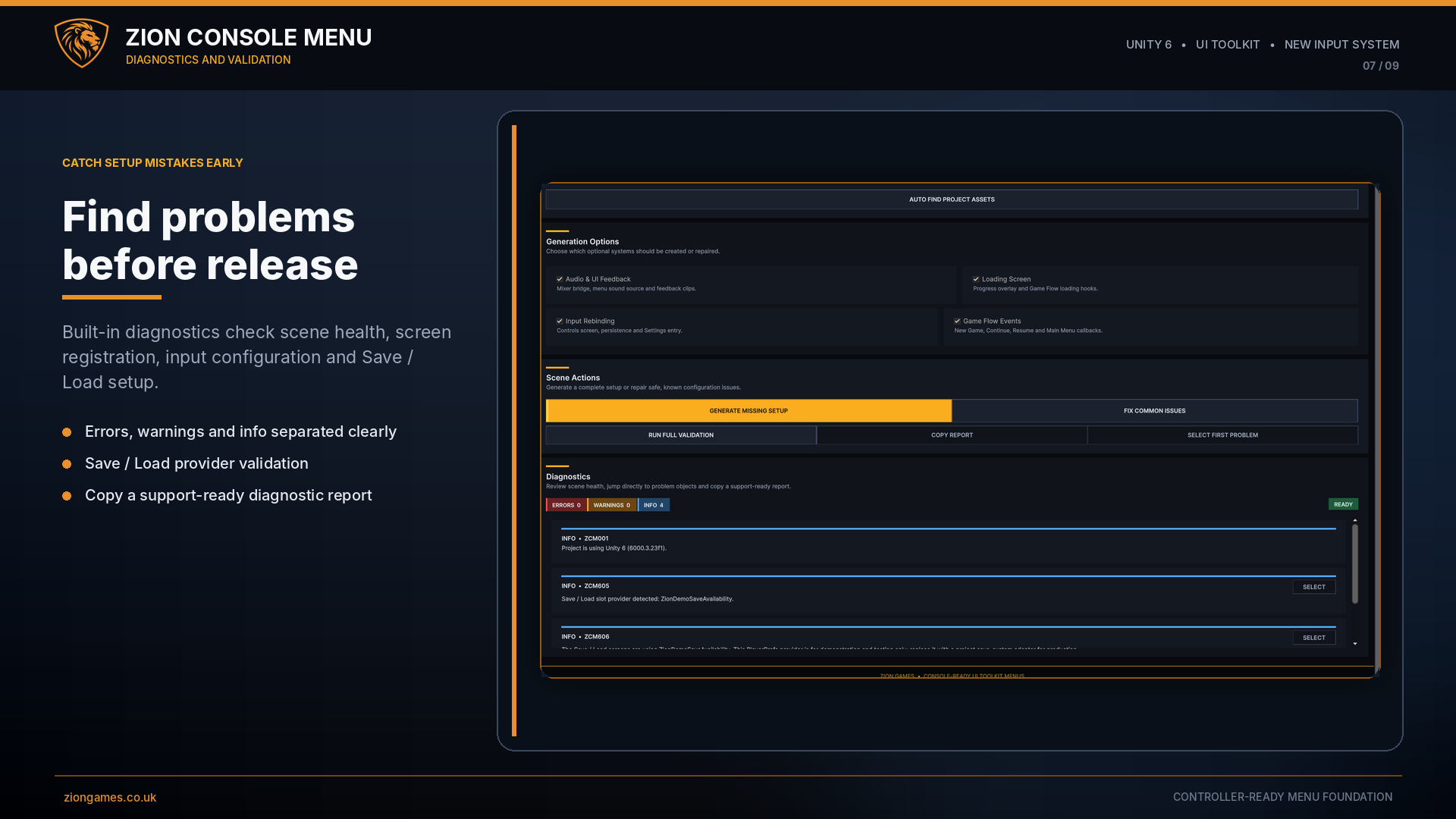
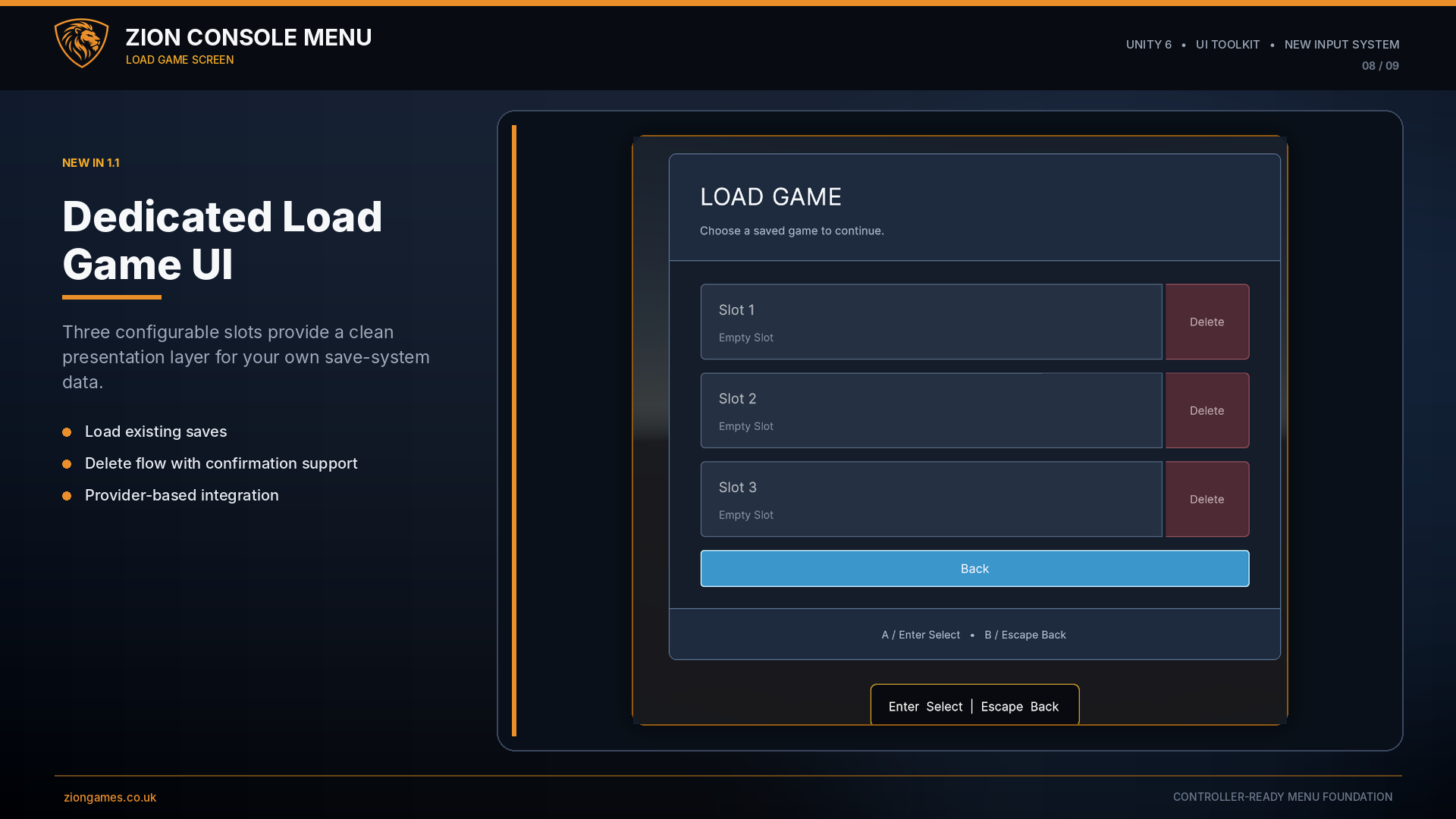
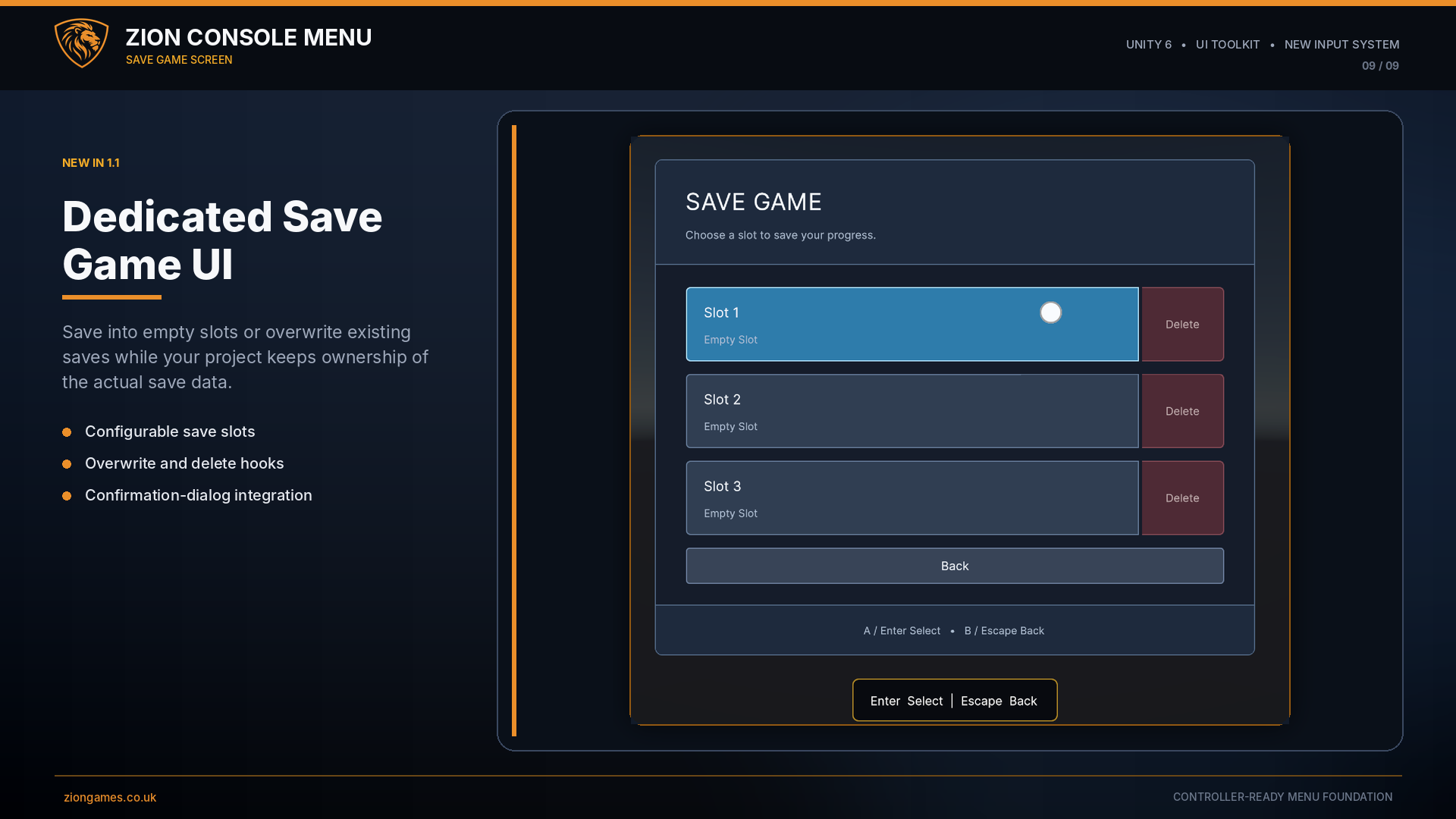
Nine focused views of the menus, settings, setup and diagnostics included in version 1.1.0.
Use the arrow keys, controls or thumbnails to explore all nine views.
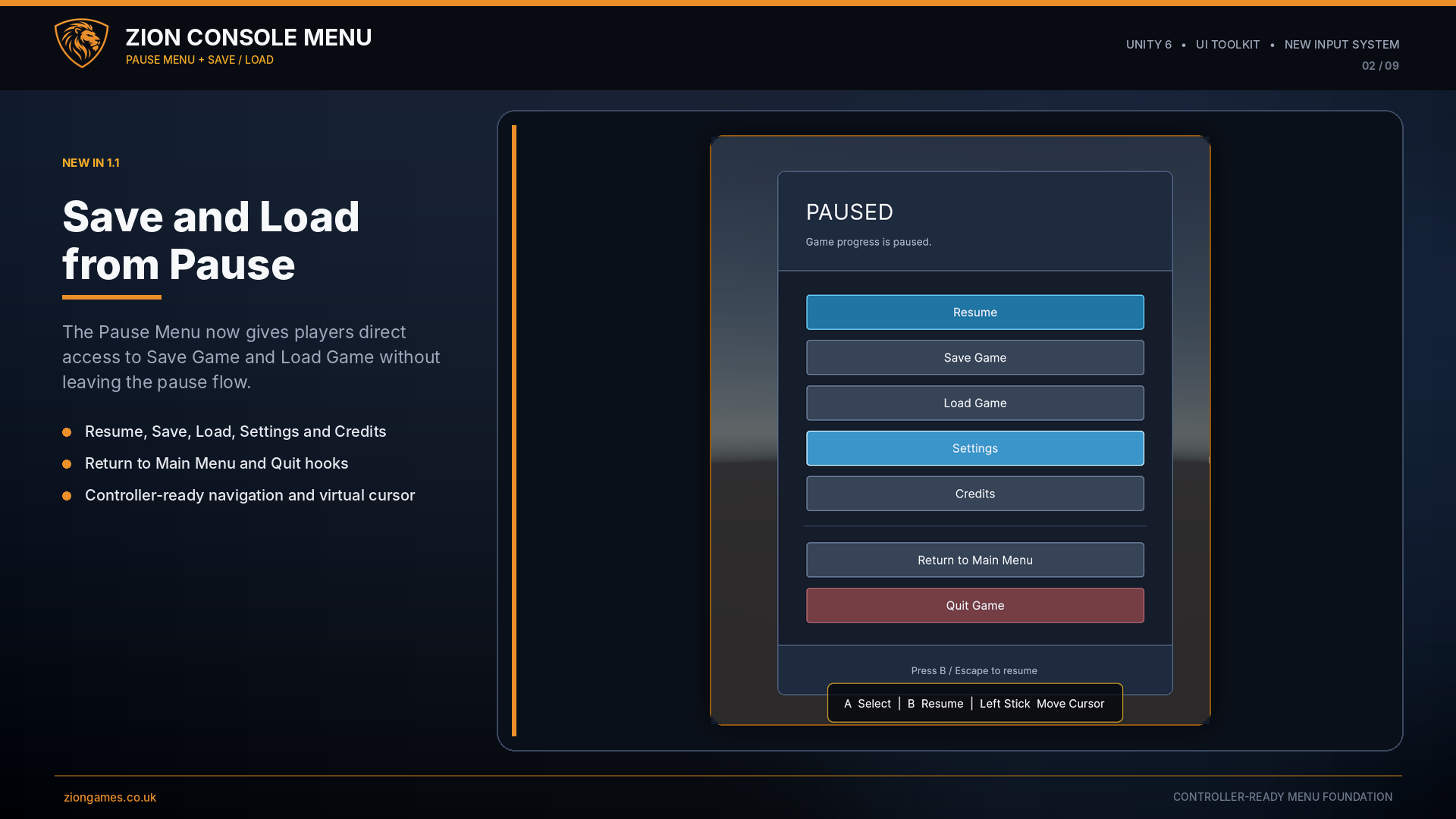
New in 1.1.0 · Save and Load from Pause
Save and Load without the architecture takeover
Zion Console Menu handles the Save Game and Load Game screens, slot presentation, requests and confirmations. Your own save system remains responsible for serialising, storing and restoring the actual game data.
Everything players expect
Use the complete foundation or connect only the flows your project needs. The system remains independent of ZionTPS and third-party gameplay frameworks.
Main Menu, Pause Menu, Save Game, Load Game, Settings, Controls, Credits, loading overlay and reusable confirmations.
Virtual cursor, D-pad navigation, Submit and Cancel actions, stick scrolling, trigger scrolling and automatic prompts.
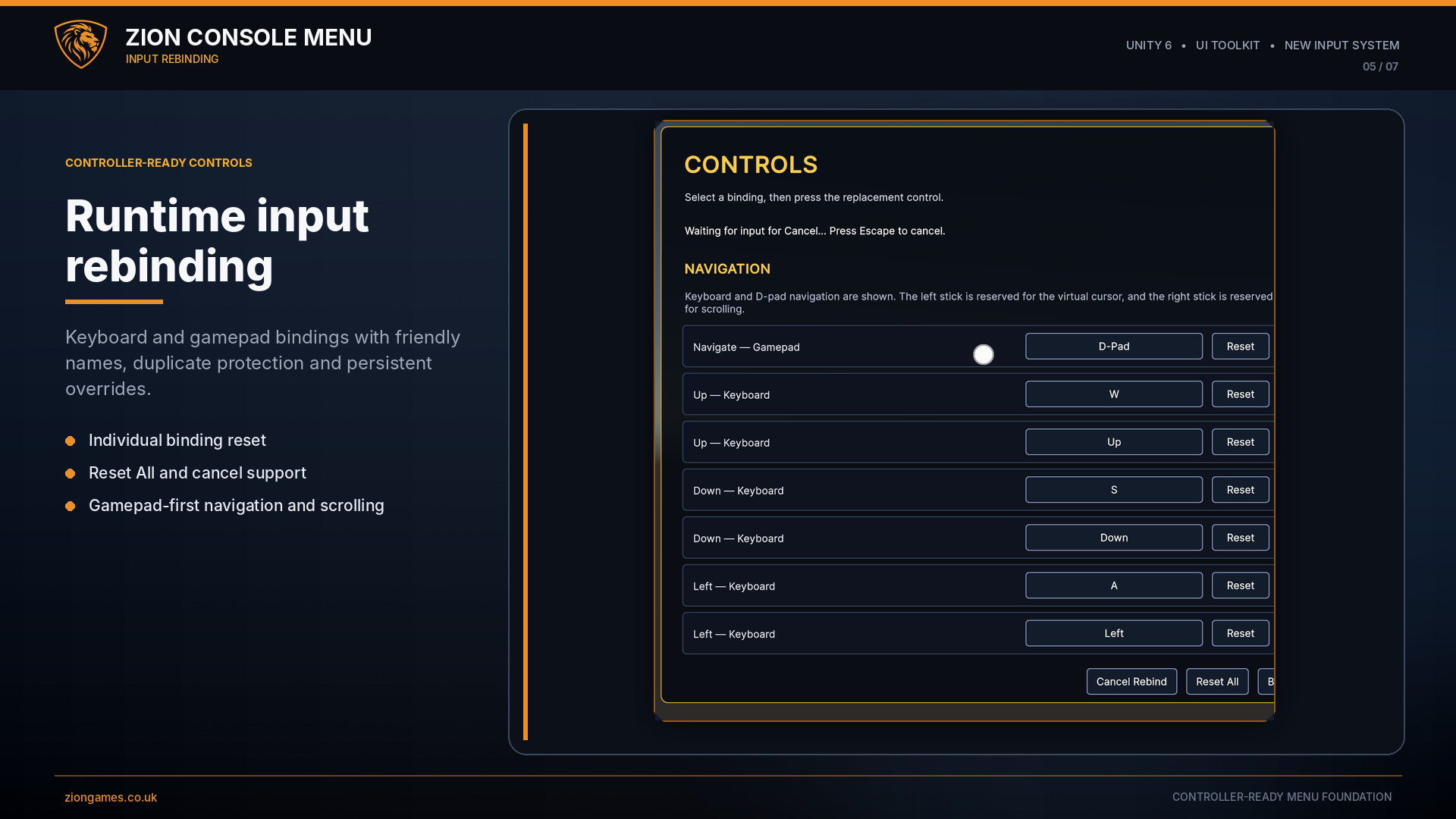
Keyboard and gamepad bindings, persistent overrides, duplicate detection, individual reset and Reset All.
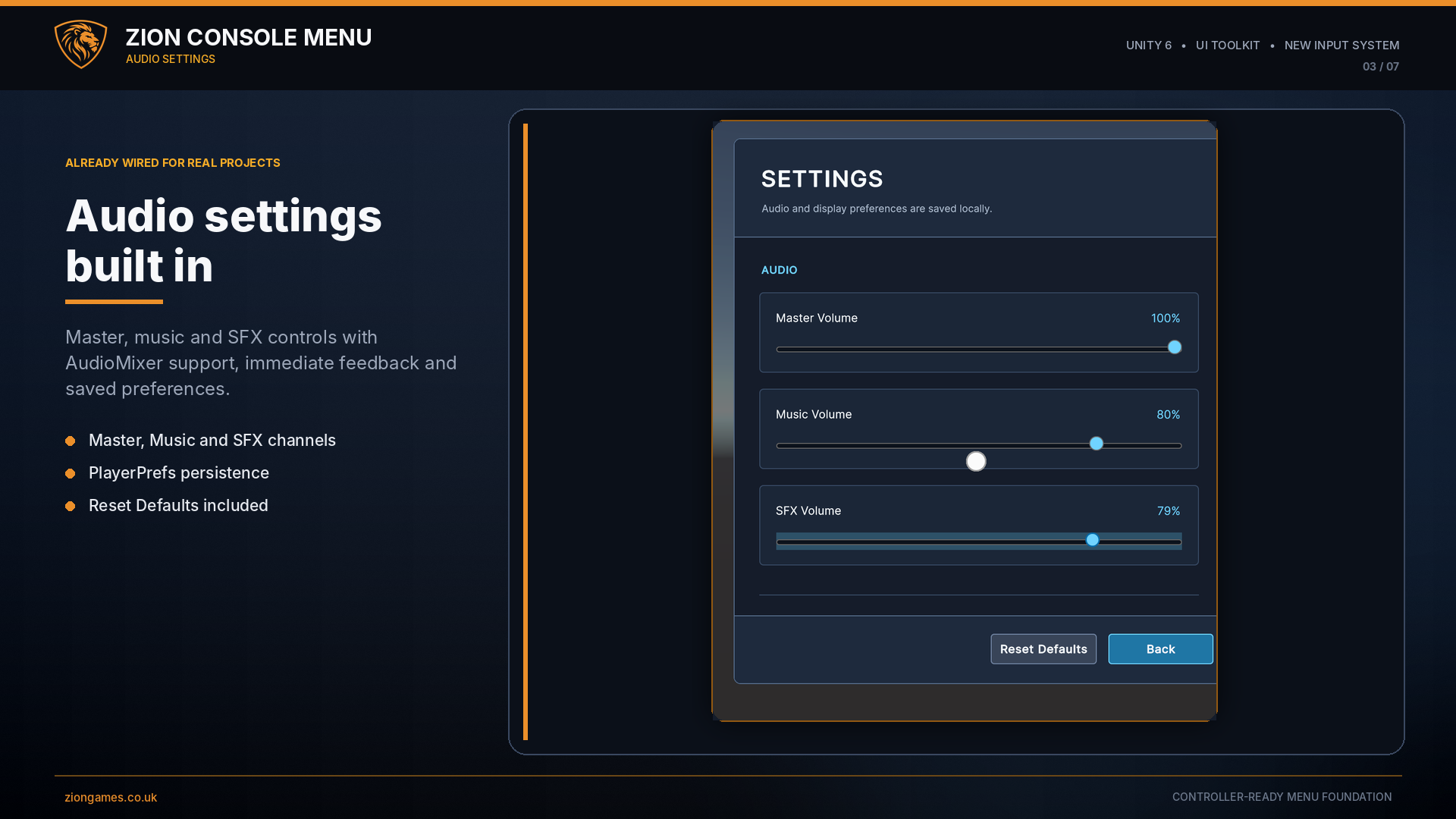
Master, music and SFX volume controls with persistent values plus UI rollover and click feedback.
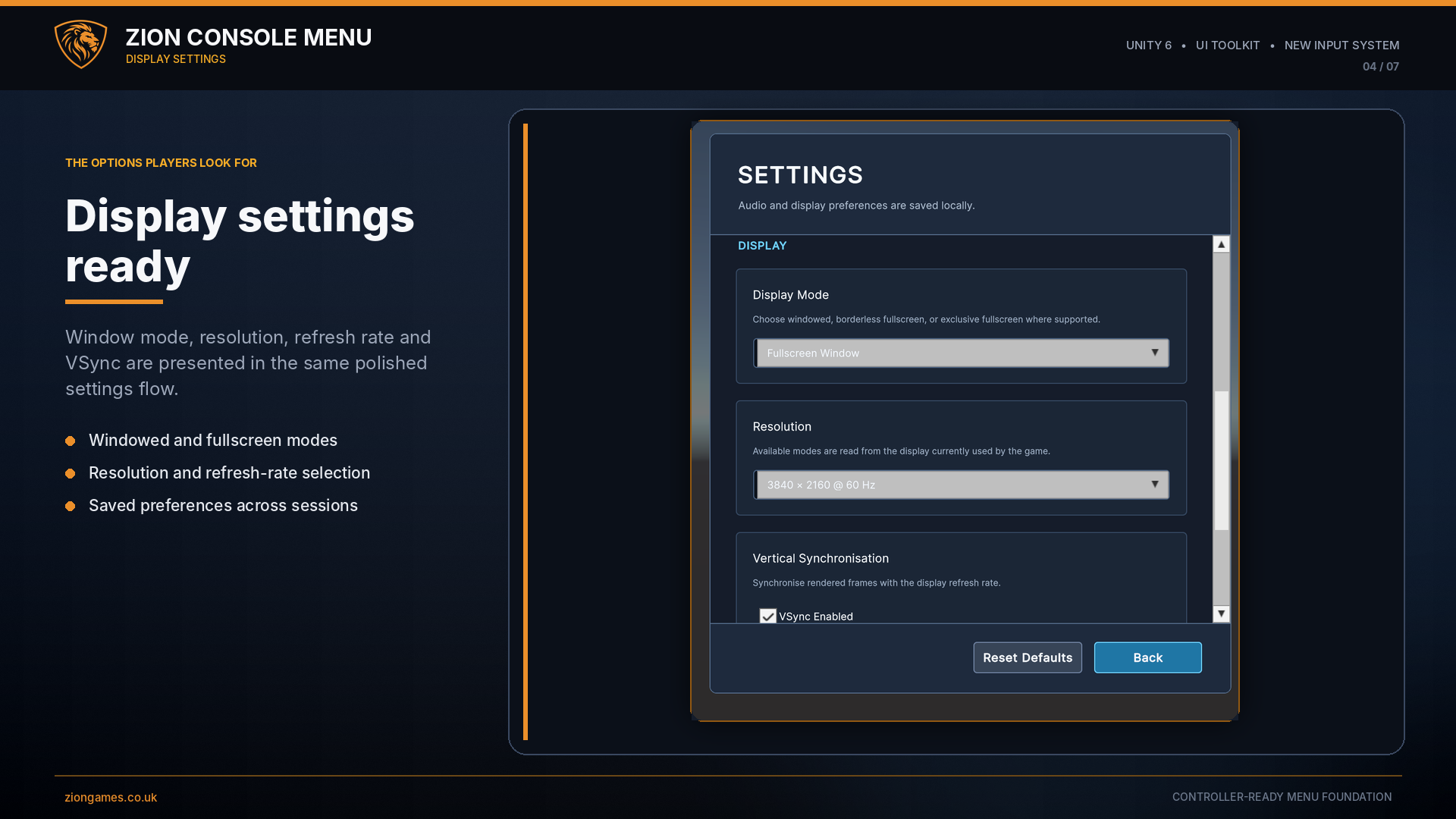
Display mode, resolution, refresh rate, VSync, persistent values and a clean reset-to-defaults path.
Central menu history, pause-state handling, loading progress and completion hooks, transition failures and scene actions.
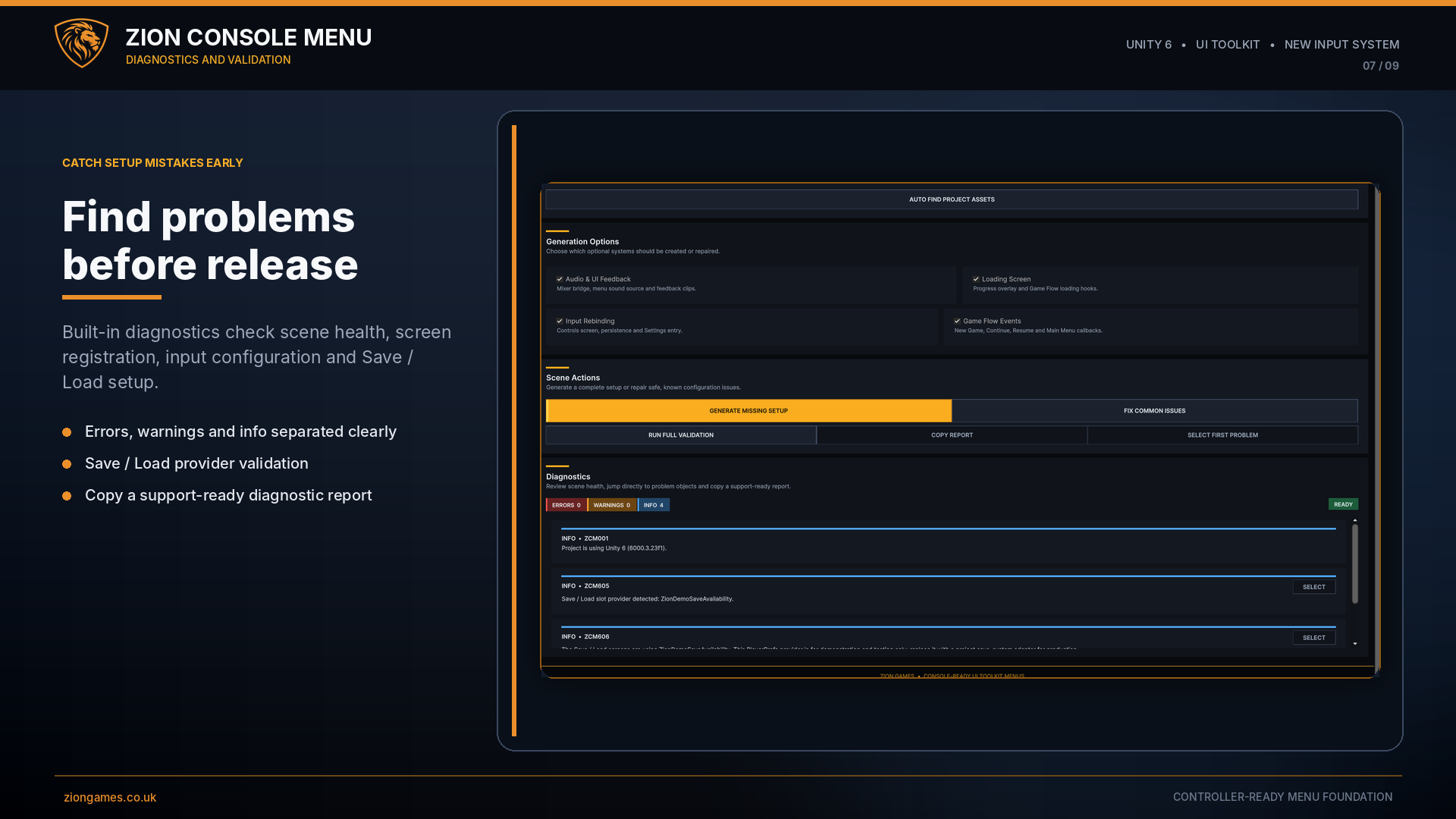
Guided setup · actionable validation
Integrate with confidence
The provider boundary keeps the menu focused on presentation and flow while your project owns the data model, persistence format and gameplay state.
Console Menu UIScreens, navigation, slots and confirmation flowSave/Load providerAvailability, metadata and action requestsYour save systemSerialises, stores and restores real game dataCompatibility & scope
Technical requirements
Zion Console Menu is built for Unity 6. Version 1.1.0 has been tested with Unity 6.0, Unity 6.3 and Unity 6.6. Separate Unity packages are available for each tested version.
Integration boundary
Setup and demonstration
Watch the system setup and demonstration, then use the full documentation when you are ready to integrate it.
Frequently asked questions
Need help deciding whether Console Menu fits your project?
Talk directly to the developer →No. It includes the player-facing Save and Load UI, slot states, confirmations and provider integration. Your project remains responsible for storing and restoring the actual game data.
Yes. The Pause Menu includes direct Save Game and Load Game access, and Continue can refresh automatically when availability changes.
No. Zion Console Menu is standalone and does not require a particular character controller, scene manager, save system or gameplay framework.
Yes. The system supports all three, including a gamepad virtual cursor, D-pad navigation, automatic prompts and runtime keyboard and gamepad rebinding.
Version 1.1.0 · available now
Start with a polished Unity 6 menu foundation and keep ownership of the systems that make your game yours.